Batch/Tunnel dryer
|
Product Description
As a premier manufacturer and supplier of advanced dehydration equipment, we present the Industrial Food Batch Tunnel Dryer for Fruit. Engineered specifically for high-capacity processing facilities, this robust system integrates cutting-edge heat pump technology to deliver precise moisture extraction while preserving the integrity of your raw materials.
Engineered for a highly controlled low-temperature drying environment ranging from 30℃ to 80℃.
Constructed with premium 304 stainless steel for uncompromising sanitation and longevity.
Features an intelligent, high-volume trolley and tray loading architecture for streamlined operations.
Equipped with an automated, sensor-driven moisture and climate management control panel.
Step into the future of food processing with an industrial drying solution engineered to transform raw, moisture-rich harvests into perfectly preserved, shelf-stable commodities. When you run your hands along the robust exterior of this drying chamber, the cool, polished finish of the premium stainless steel speaks volumes about its enduring craftsmanship. As the heavy-duty doors seal shut, the system awakens with a steady, reassuring hum from the high-efficiency circulation fans, signaling the start of a meticulous dehydration journey. Inside, the gentle yet relentless flow of warm air sweeps across every tier of the loaded carts, carrying away excess moisture while locking in the vibrant natural colors, essential nutrients, and concentrated sweet aromas of the fresh produce.
During operation, the material to be dried is placed into meticulously perforated baking trays, which are then securely loaded onto mobile drying carts. These carts glide smoothly into the drying chamber from the entrance. Simultaneously, hot air from the advanced air supply system enters from the end of the drying chamber and flows counter-currently to the movement of the carts, ensuring full, enveloping contact with every single slice or granule. The drying chamber automatically and precisely controls the temperature, while the dense, humid air is automatically exhausted by the intelligent fan system. This seamless, continuous rhythm not only streamlines your facility's daily operations but also guarantees an uncompromising, uniform texture in every batch, elevating the market value of your final output.
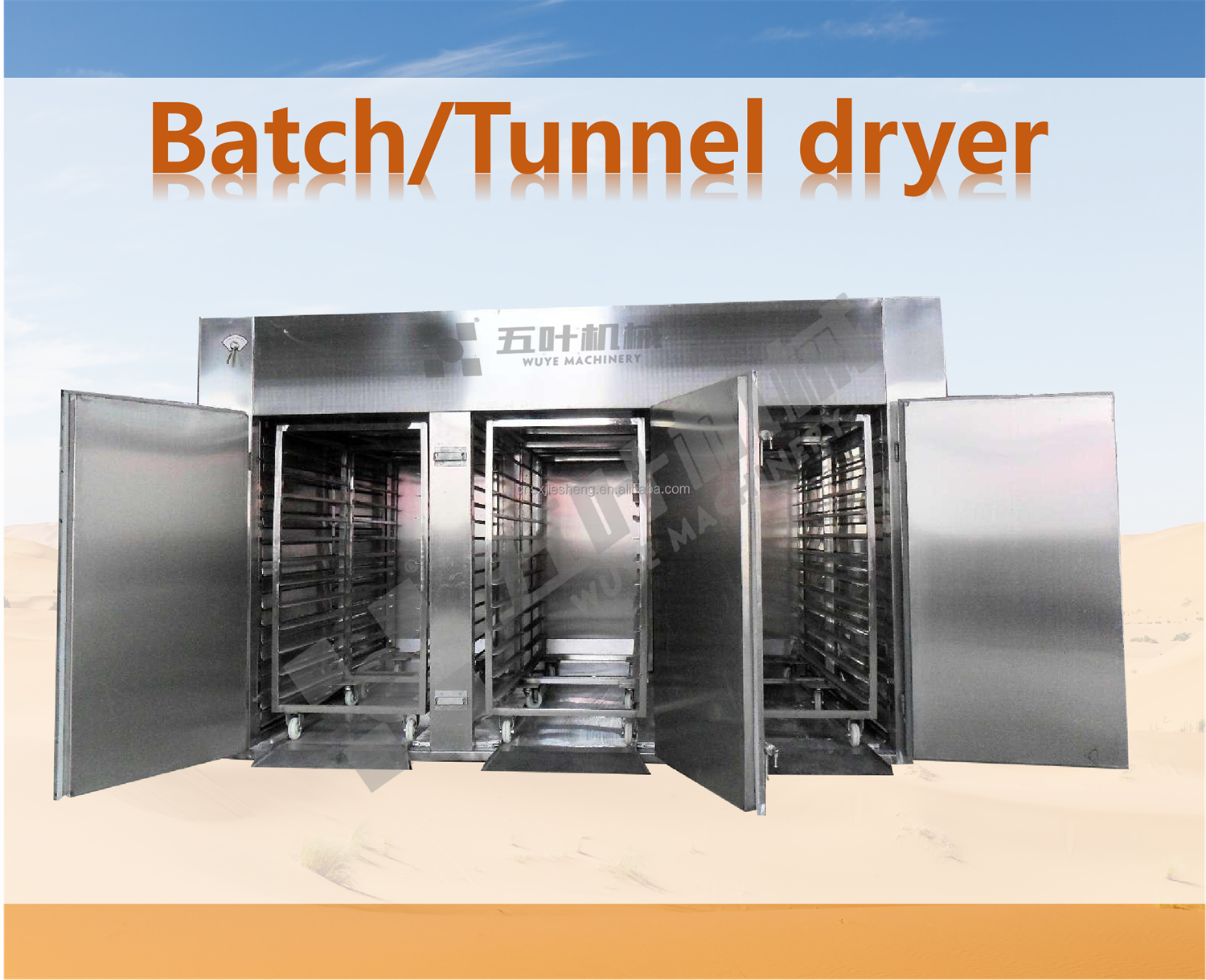
The heat pump system is used to transfer heat from the air and achieve material drying through low-temperature drying (usually 30-80℃), which is highly energy-saving and suitable for high-value-added and heat-sensitive foods.
|
Design highlights
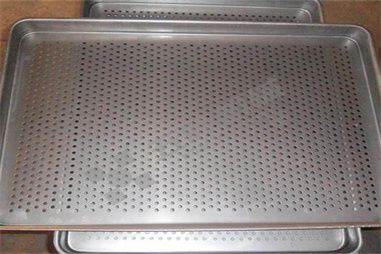
Food-grade material
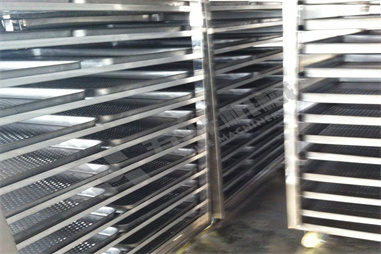
Trolley + material tray system
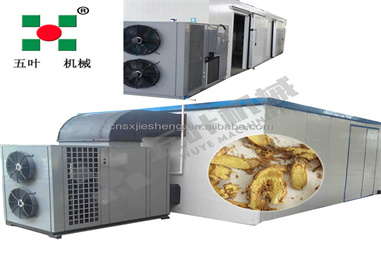
Optimization of the air supply system
1.Food-Grade Materials
All components that come into direct contact with the material (such as trays and carts) are constructed from 304 stainless steel or food-grade plastic. Their smooth surfaces facilitate easy cleaning, effectively preventing metal corrosion and material contamination.
2.Cart & Tray System
High-Efficiency Loading: The drying carts feature a multi-tiered frame design (typically 6 to 20 layers) and are equipped with metal mesh trays (e.g., stainless steel or aluminum alloy). This provides a large surface area for material spreading and ensures excellent hot air penetration, making it ideal for sheet-like and granular materials (such as vegetables and medicinal herbs).
Flexible Mobility: The carts are fitted with swivel or rigid casters at the base, enabling quick entry and exit from the drying chamber. When integrated with a track system, this allows for continuous production-line operation, reducing manual handling intensity.
3.Optimized Air Supply System
Hot Air Circulation Technology: Multiple sets of fans and deflectors create a three-dimensional "horizontal + vertical" hot air circulation pattern, eliminating local temperature imbalances. This enhances drying efficiency by 20%-40% compared to traditional unidirectional airflow equipment.
Intelligent Dehumidification: Adjustable dehumidification vents are located at the top or sides of the drying chamber. Their operation is regulated in conjunction with humidity sensors to control moisture removal, preventing both over-drying and moisture regain of the material.
|
Applicable
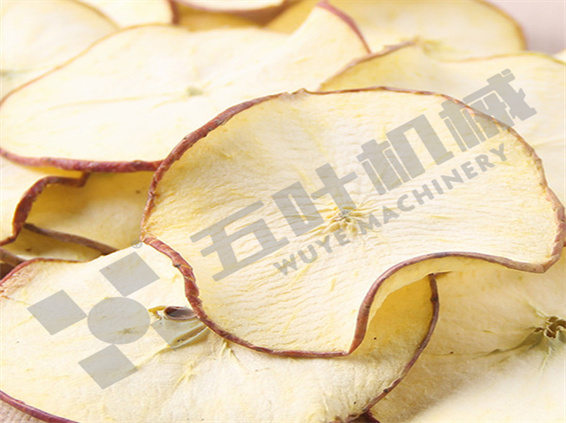
Case of Dried fruits-Apple

Case of Dried fruits-Lemon
|
Technical parameters
During operation, the material to be dried is placed into baking trays, which are then loaded onto drying carts. The carts enter the drying chamber from the entrance. Simultaneously, hot air from the air supply system enters from the end of the drying chamber and flows counter-currently to the movement of the carts, ensuring full contact with the material. The drying chamber automatically controls the temperature, while the moisture and humidity are automatically exhausted by the fan.
|
Products
Energy Saving & Eco-Friendly Operation
In today's competitive landscape, reducing operational overhead is just as critical as maximizing output. This system operates on a highly efficient closed-loop heat recovery principle driven by advanced heat pump technology.
Captures and recycles ambient air heat, drastically cutting down daily electricity consumption.
Outperforms traditional electric, steam, or gas-fired dryers by significantly lowering utility costs.
Features a fully enclosed drying process with zero waste gas or waste heat emissions, championing green manufacturing practices.
Provides a quieter operating environment, reducing noise fatigue on the production floor.
Capacity Configuration & Operational Flexibility
Scalability and ease of handling are built into the core design of this drying infrastructure. The robust trolley and multi-tiered metal mesh tray system provide an expansive surface area for optimal airflow penetration.
Accommodates 6 to 20 layers per cart, perfect for high-volume batch processing ranging from 200 to 3000 kg.
Equipped with heavy-duty swivel or rigid casters for swift, low-effort maneuverability in and out of the chamber.
Seamlessly integrates with existing track systems to facilitate continuous, assembly-line-style production.
Drastically reduces manual labor fatigue and minimizes material transfer times.


