Views: 0 Author: Site Editor Publish Time: 2026-06-10 Origin: Site

Choosing between a liquid nitrogen freezer and a blast chiller is an important decision for food processors that need stable product quality, efficient throughput, and reliable production performance. Both technologies are widely used in commercial food processing, but they are designed for different production goals and application scenarios.
A blast chiller is commonly used for controlled cooling, batch processing, and safe temperature reduction after cooking or preparation. A liquid nitrogen freezer, also known as a cryogenic freezer, is designed for ultra-fast freezing, compact production layouts, and high-value products that require excellent moisture retention, texture, and appearance.
For food manufacturers, the right choice depends on product type, output capacity, available facility space, freezing speed, operating model, and final product quality expectations. Shaoxing Jiesheng Food Machine Technology Co., Ltd. (Wuye Machinery) provides food processing and quick freezing solutions for different production needs, helping customers select suitable equipment according to real factory conditions.
Liquid nitrogen freezers support ultra-fast freezing and excellent moisture retention.
Blast chillers are suitable for controlled cooling and batch food processing.
Both systems can improve food safety, processing efficiency, and product stability when correctly matched to the application.
Equipment selection should be based on product characteristics, throughput, factory layout, and long-term production planning.
A blast chiller is a commercial cooling system that uses high-velocity cold air to rapidly reduce the temperature of food products. It is commonly used after cooking, processing, or preparation to bring food down to a safe temperature range.
Blast chillers are widely used in food factories, central kitchens, catering facilities, and ready-meal production lines. They help processors control product temperature, support food safety management, and prepare products for packaging, storage, or further processing.
Common applications of blast chillers include:
Cooked meat products
Prepared meals
Sauces and soups
Bakery products
Ready-to-eat foods
Bulk food cooling before storage or packaging
Blast chillers are valued for stable cooling performance, familiar operation, and suitability for batch production. They are especially useful when processors need controlled temperature reduction as part of a standardized food processing workflow.
A liquid nitrogen freezer uses liquid nitrogen at extremely low temperatures to freeze food products quickly. Liquid nitrogen reaches approximately -196°C, allowing products to pass through the freezing stage in a very short time.
The fast freezing process helps form smaller ice crystals inside food products, which supports better texture, moisture retention, color, and post-thaw quality. This makes liquid nitrogen freezing especially suitable for high-value, high-moisture, or delicate food products.
Liquid nitrogen freezers are commonly used for:
Seafood
Meat and poultry
Fruits and vegetables
Bakery products
Dairy products
Prepared foods
High-moisture or delicate products
Individually quick frozen products
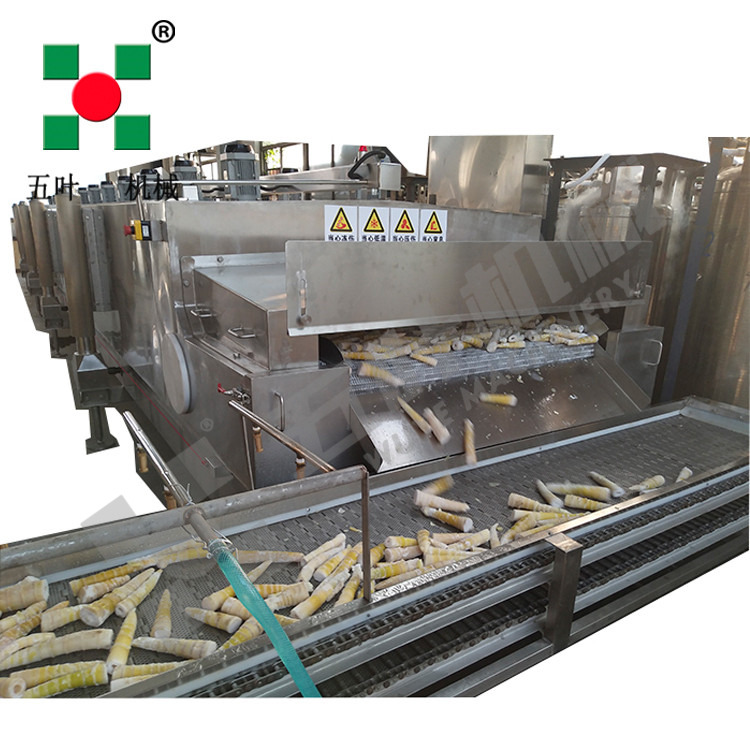
A liquid nitrogen tunnel quick freezer can be integrated into continuous production lines. Products move through the tunnel on a conveyor belt while liquid nitrogen is distributed in a controlled freezing zone. This helps processors achieve fast freezing, efficient production, and consistent product quality.
Although both systems support food safety and temperature control, their working principles and application focus are different. A blast chiller is commonly used for controlled cooling, while a liquid nitrogen freezer is designed for rapid freezing and product quality preservation.
Comparison Point | Blast Chiller | Liquid Nitrogen Freezer |
|---|---|---|
Cooling Method | High-velocity cold air | Direct cryogenic freezing with liquid nitrogen |
Main Purpose | Rapid cooling or controlled chilling | Ultra-fast freezing |
Production Style | Batch cooling or controlled processing | Continuous or batch quick freezing |
Freezing Speed | Stable and controlled | Very fast |
Product Suitability | Cooked foods, prepared meals, and bulk products | Seafood, meat, fruits, and high-value delicate foods |
Facility Layout | Suitable for planned cooling rooms or batch areas | Compact production line layout with nitrogen supply system |
Quality Focus | Safe cooling and stable handling | Moisture retention, texture, color, and yield preservation |
Both systems have clear value. The purpose of comparison is not to determine which technology is universally better, but to identify which system better matches the product, production line, and business goals.
Freezing speed has a direct influence on food texture, moisture retention, and post-thaw quality. When food freezes quickly, water inside the product forms smaller ice crystals. Smaller ice crystals help maintain the internal structure of seafood, meat, fruits, vegetables, and other high-moisture foods.
A liquid nitrogen freezer is particularly suitable when a processor needs fast surface freezing, individual product separation, and premium post-thaw appearance. This is valuable for IQF seafood, fruit pieces, meat portions, and other products where appearance and yield are important.
A blast chiller provides controlled temperature reduction and is well suited for products that need safe cooling before packaging, storage, or further processing. It is commonly used in production environments where consistent cooling performance and batch handling are required.
For companies producing premium frozen foods, liquid nitrogen freezing can support:
Better moisture retention
Improved product appearance
Fast crust freezing
Reduced product sticking
Stable IQF results
Flexible production changeover
Factory space is another important factor in the liquid nitrogen freezer vs blast chiller decision. Different production environments require different equipment layouts, loading methods, and supporting systems.
A blast chiller is typically arranged as a dedicated cooling chamber, cabinet, or batch cooling system. It works well in facilities with available space for trays, racks, carts, or batch loading. This configuration is practical for cooked foods, prepared meals, and products that require controlled temperature reduction before storage or packaging.
A liquid nitrogen tunnel freezer is often integrated directly into the production line. Since freezing occurs quickly, the system can support high output within an efficient footprint. This is especially helpful for factories that want to increase freezing capacity, improve line continuity, or process high-value products with limited floor space.
Shaoxing Jiesheng Food Machine Technology Co., Ltd. (Wuye Machinery) can provide quick freezing equipment solutions based on product size, output capacity, conveyor layout, and factory space.
When comparing a liquid nitrogen freezer and a blast chiller, both initial investment and daily operation should be considered. The total cost depends on equipment configuration, facility conditions, product requirements, and production schedule.
A blast chiller or mechanical cooling system usually involves refrigeration components, insulated structure, electrical systems, and installation planning. It is often selected for stable production environments where controlled cooling is required as part of a regular food processing process.
A liquid nitrogen freezer may offer a compact structure and fast freezing performance, while its operating cost is related to liquid nitrogen consumption. The actual nitrogen usage depends on product temperature, product size, target core temperature, belt speed, throughput, and production schedule.
Before selecting quick freezing equipment, food processors should evaluate:
Product type and moisture content
Required freezing or chilling temperature
Hourly and daily output
Factory space and production layout
Labor arrangement
Energy and nitrogen supply conditions
Product selling price and quality requirements
Long-term production plan
A professional food machinery supplier can help calculate production requirements and recommend a suitable equipment configuration before procurement.
Seafood products such as shrimp, scallops, lobster, fish fillets, and shellfish require careful freezing because moisture retention, texture, and appearance are closely related to final market value.
A liquid nitrogen freezer helps preserve product shape, color, and freshness appearance. For premium seafood processors, a lobster liquid nitrogen IQF freezer can support fast freezing and individual product separation.
High-moisture fruits such as berries, mango, peach, and tropical fruit pieces require fast and stable freezing to maintain shape and texture. A liquid nitrogen freezer can quickly stabilize the product surface, helping reduce sticking and maintain an attractive frozen appearance.
Vegetables, diced products, and small cut pieces can also benefit from IQF processing when processors require free-flowing frozen products for automatic weighing and packaging.
Meat portions, chicken pieces, beef slices, pork products, and prepared meat items can use liquid nitrogen freezing when fast processing and surface quality are important. For cooked meat preparation and batch cooling, blast chilling can also be integrated into the production process.
The best choice depends on product thickness, target temperature, packaging method, production speed, and final market requirements.
Prepared meals, sauces, cooked foods, and packaged products often require controlled cooling before storage or distribution. Blast chillers are widely used in this type of production because they help maintain process stability and support food safety management.
For high-value ready meals or products requiring rapid freezing after preparation, liquid nitrogen freezing can also be considered as part of a complete production solution.
Bakery products, dough, desserts, and dairy-based foods may require fast temperature control to maintain texture and shape. Liquid nitrogen freezing can help achieve quick stabilization, while blast chilling can support controlled cooling before packaging or storage.
Production format is an important part of equipment selection. Different factories may require continuous inline freezing, batch cooling, or a combined process depending on product flow and production capacity.
A liquid nitrogen tunnel quick freezer is suitable for continuous production lines. Products are placed on a conveyor belt and pass through the freezing zone automatically. Operators can adjust belt speed, freezing time, and nitrogen flow according to different products.
This makes liquid nitrogen tunnel freezing suitable for factories that process multiple product types or require flexible production changeover during the same shift.
A blast chiller is commonly used for batch processing. Products can be loaded in trays, racks, carts, or containers. This format is practical for food processors that handle varied products, cooked foods, or production batches requiring controlled cooling cycles.
In some food factories, blast chilling and liquid nitrogen freezing can be used together to create a more complete temperature control process.
Both liquid nitrogen freezers and blast chillers require professional installation, correct operation, and regular maintenance. A well-designed system helps improve production stability, hygiene management, and long-term equipment performance.
For liquid nitrogen freezers, the factory should prepare proper nitrogen storage, ventilation, oxygen monitoring, and staff training. Since liquid nitrogen expands into gas during use, ventilation design is important for safe and stable operation.
For blast chillers, the facility should consider refrigeration capacity, drainage, cleaning access, electrical requirements, and temperature control systems.
Working with an experienced manufacturer such as Shaoxing Jiesheng Food Machine Technology Co., Ltd. (Wuye Machinery) helps ensure that the selected system meets production, safety, hygiene, and maintenance requirements.
Shaoxing Jiesheng Food Machine Technology Co., Ltd. (Wuye Machinery) focuses on the research, design, and production of food machinery, including freezing food equipment, drying food equipment, refrigeration systems, and food production lines.
With more than 30 years of experience in food machinery design and production, the company has developed multiple product series and equipment specifications for domestic and international food processing enterprises.
Company strengths include:
Professional R&D capability
Practical food processing equipment design
Strict quality management
Advanced manufacturing equipment
Experienced production team
Customized food production line solutions
Support for different freezing and refrigeration applications
For customers comparing a liquid nitrogen freezer vs blast chiller, Shaoxing Jiesheng Food Machine Technology Co., Ltd. (Wuye Machinery) can provide equipment selection suggestions based on product characteristics, throughput targets, available space, and production process requirements.
The right freezing or chilling system should be selected according to the actual production process. A clear evaluation of product quality goals, production speed, facility layout, and operating conditions can help food processors make a practical decision.
Ultra-fast freezing
IQF product quality
Compact line layout
Fast production changeover
High moisture retention
Premium seafood, fruit, meat, or prepared food freezing
Continuous tunnel freezing
Controlled cooling after cooking
Batch food chilling
Stable temperature reduction
Prepared meal processing
Cooked food handling
Cooling before storage or packaging
In many food factories, both systems can work together in a complete food processing line. For example, cooked products may first go through controlled chilling and then proceed to quick freezing, depending on the product and process design.
The comparison between a liquid nitrogen freezer vs blast chiller is not about which technology is universally better. It is about matching the equipment to the product, production flow, space conditions, and quality goals.
A blast chiller supports controlled cooling and stable batch processing. A liquid nitrogen freezer supports ultra-fast freezing, compact production layouts, and high-quality frozen food output. For seafood, fruits, meat, dairy, bakery, and premium frozen foods, liquid nitrogen freezing can be a valuable solution for improving product appearance, texture, and processing efficiency.
Shaoxing Jiesheng Food Machine Technology Co., Ltd. (Wuye Machinery) provides food machinery and quick freezing equipment solutions for processors that need reliable performance, practical design, and professional production support.
A liquid nitrogen freezer uses cryogenic liquid nitrogen for ultra-fast freezing, while a blast chiller uses high-velocity cold air for controlled cooling or chilling. The best choice depends on product type, production speed, and final quality requirements.
Yes. A liquid nitrogen freezer is suitable for IQF seafood, fruits, vegetables, meat portions, bakery products, and other foods that require fast freezing and individual separation.
A blast chiller is suitable when products need controlled cooling after cooking, preparation, or processing. It is widely used for prepared meals, cooked foods, sauces, and batch production.
Yes. Fast freezing can help maintain moisture, texture, color, and product shape, especially for high-value or high-moisture foods.
You should consider product type, output capacity, target temperature, factory space, production method, energy conditions, nitrogen supply, hygiene requirements, and long-term operating cost.
Yes. Shaoxing Jiesheng Food Machine Technology Co., Ltd. (Wuye Machinery) provides food machinery, refrigeration systems, quick freezing equipment, and food production line solutions based on customer production requirements.