Views: 0 Author: Site Editor Publish Time: 2026-09-07 Origin: Site

High-volume meat processing demands exact control over freezing speed and methodology. The rate at which meat freezes directly dictates product yield, texture, and shelf life. Slow freezing allows large ice crystals to form. These jagged formations rupture cellular walls, causing severe drip loss when the product thaws. Selecting industrial freezing machinery requires balancing facility footprint constraints, energy consumption, and strict hygiene standards. An improper equipment choice creates production bottlenecks, increases operational costs, and compromises food safety. Plant managers must align thermal dynamics with specific product geometries to maintain continuous throughput. This guide provides a technical evaluation framework for selecting industrial quick freezing equipment. We compare tunnel, spiral, and specialized systems to help you match these technologies to specific production lines, facility constraints, and target throughput requirements.
Yield Preservation: Rapid freezing technologies minimize drip loss and preserve meat weight, directly impacting bottom-line profitability.
System Matching: The choice between spiral and tunnel freezers depends heavily on product geometry, batch size, workload capacity, and available floor space.
Sanitary Design & Compliance: Equipment must feature advanced Clean-in-Place (CIP) systems, precise temperature data logging, and fully welded stainless steel construction to meet stringent USDA/FDA/HACCP compliance.
Upgrading freezing infrastructure requires establishing hard baseline metrics before reviewing manufacturer specifications. You must define target freezing times based on the thickest product in your catalog. Core temperature requirements typically demand reaching -18°C or lower before the product exits the insulated enclosure. Measure the maximum allowable dehydration rate for your specific meat products. A dehydration rate exceeding 1% indicates inefficient airflow, excessive fan speed, or prolonged dwell times. Establish these metrics early to form the foundation of your equipment specifications and performance guarantees.
Determine the exact entry temperature of the meat from upstream processes.
Define the required exit core temperature for safe storage and transport.
Calculate the maximum acceptable moisture loss percentage per batch.
Establish the required hourly throughput in kilograms to prevent upstream bottlenecks.
The critical zone of maximum ice crystal formation occurs between -1°C and -5°C. Meat must pass through this thermal window rapidly. Slow transitions allow water molecules to migrate extracellularly and form large, jagged ice crystals. These crystals physically puncture muscle fibers. When the end-user thaws the meat, the damaged cells release moisture, resulting in a dry texture and visible drip loss in the packaging. Rapid freezing forces water to freeze instantly in place. This creates microscopic intracellular ice crystals that leave cellular structures intact. Preserving cellular integrity locks in natural juices, flavor, and exact product weight.
Many facilities start with small batch blast freezers. As production volumes scale, batch freezing becomes a severe operational bottleneck. Loading and unloading racks requires heavy manual labor and creates inconsistent freezing profiles depending on rack placement near the evaporators. Identify the exact production volume where transitioning to continuous freezing becomes operationally necessary. Facilities processing over 1,000 kilograms per hour generally see immediate labor savings and yield improvements by switching to continuous inline systems. Continuous systems provide uniform thermal exposure to every single piece of meat on the belt.
Operational Metric | Batch Blast Freezing | Continuous Inline Freezing |
|---|---|---|
Labor Requirements | High (manual rack loading/unloading) | Low (automated feed and discharge) |
Freezing Consistency | Variable based on rack position | Highly uniform across all products |
Throughput Capacity | Limited by physical rack space | Scalable via belt speed adjustments |
Footprint Efficiency | Requires staging areas for racks | Integrated directly into the processing line |
Modern continuous freezing systems eliminate the start-and-stop delays of batch processing. They enable direct integration with upstream processing lines. Meat patties move directly from the forming machine onto the freezer belt without human intervention. This continuous flow prevents raw meat from sitting at ambient temperatures on the factory floor, reducing bacterial growth risks. Scalability involves variable belt speeds and adjustable fan drives. Operators adjust retention times based on the specific product running that shift, allowing a single line to handle thin bacon slices in the morning and thick sausage links in the afternoon.
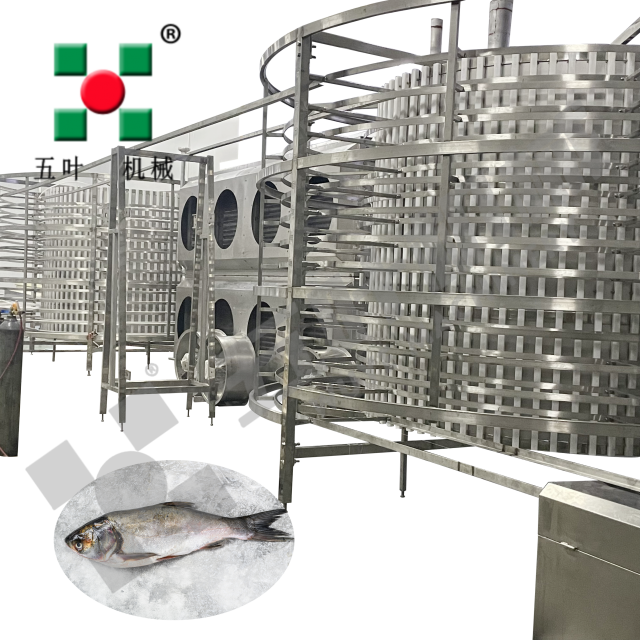
The IQF Spiral Freezer for Meat utilizes a continuous vertical conveyor system. The belt winds upward or downward around a rotating central drum. This design maximizes freezing capacity within a minimal horizontal footprint. It handles high-volume, continuous processing of raw or cooked meat products. Common applications include sausages, meatballs, and thick primal cuts requiring longer dwell times to reach core temperatures.
The vertical stacking allows thousands of feet of belt to fit inside a compact insulated enclosure. The mechanical complexity of the drum drive, belt tensioning systems, and vertical airflow management demands rigorous preventative maintenance. Belt flips or tension failures halt production entirely. Facilities must train maintenance staff specifically on spiral drive mechanics to prevent catastrophic belt jams.
A Meat Portion Tunnel Quick Freezer operates on a linear conveyor system. Cold air blasts over the product as it moves horizontally through a long insulated tunnel. This system excels at rapid surface freezing. It handles flat, uniform products like burger patties, thin steaks, and bacon slices efficiently.
Tunnel freezers offer mechanical simplicity. The straight belt path reduces tension issues and makes visual inspection straightforward. The primary constraint is the significant linear floor space required. Extending dwell time means physically lengthening the tunnel. They are less efficient for very thick or irregularly shaped primal cuts that require extended exposure to cold temperatures, as the required tunnel length would exceed most facility dimensions.
Impingement freezers direct high-velocity jets of cold air directly at the top and bottom surfaces of the product. This aggressive airflow strips away the thermal boundary layer surrounding the meat. It results in ultra-fast freezing times for thin products. Impingement technology frequently handles surface crust freezing prior to downstream slicing or cutting.
Crust freezing stiffens the outer layer of the meat. This ensures clean cuts, prevents blade gumming on high-speed slicers, and minimizes product deformation during portioning. Impingement freezers consume significant fan power to generate the necessary air velocity and are generally restricted to products under 20mm in thickness.
Plate freezers compress packaged or bulk meat between refrigerated metal plates. The direct contact between the cold metal and the product provides excellent heat transfer. This method handles block freezing of offal, trim, and bulk meat destined for export or long-term cold storage.
The system produces dense, uniform frozen blocks that stack efficiently on shipping pallets. Plate freezing introduces specific downstream processing requirements. The solid blocks require specialized reduction equipment before secondary processing. Facilities must operate heavy-duty flakers, guillotines, or frozen meat cutters to break the blocks back down into manageable pieces for grinding or blending.
Equipment Type | Primary Mechanism | Best Suited For | Facility Footprint |
|---|---|---|---|
Spiral Freezer | Vertical rotating conveyor drum | Thick cuts, meatballs, sausages | Compact horizontal, high vertical |
Tunnel Freezer | Linear horizontal conveyor | Burger patties, bacon, thin steaks | Long linear space required |
Impingement Freezer | High-velocity targeted air jets | Crust freezing, very thin cuts | Medium linear space |
Plate Freezer | Direct contact refrigerated plates | Bulk trim, offal, export blocks | Compact, batch-oriented |
Diced poultry presents unique freezing challenges. Small, wet pieces naturally adhere to each other and to the conveyor belt. Evaluating a Chicken Cube Spiral Freezer requires analyzing the belt mesh and airflow configuration. Specialized plastic or tightly woven stainless steel meshes prevent small cubes from falling through the gaps and accumulating on the freezer floor.
True Individual Quick Freezing (IQF) requires mechanical agitation or specific upward airflow to separate the pieces as they freeze. If the chicken cubes freeze together into clumps, downstream packaging machines will jam and weight accuracy will fail. The equipment must freeze the surface instantly upon entering the enclosure to seal in moisture and prevent product agglomeration.
Chicken nuggets, breaded patties, and formed meatballs require gentle handling. Transitioning these items directly from forming or battering machines onto a freezer belt risks altering their shape or stripping the wet breading. The freezer belt must support the product without leaving deep mesh indentations on the bottom surface, which degrades the final appearance.
Airflow must be carefully balanced. If the air velocity is too high at the infeed, it blows the loose breading off the meat. This contaminates the evaporator coils and degrades the final product. A stepped airflow design, where velocity increases only after the crust has set, protects fragile formed products during the initial freezing phase.
Freezing whole hams, pork loins, or large beef primals requires extended dwell times. The thermal mass of these cuts means the core takes significantly longer to reach -18°C than the surface. Spiral freezers handle these applications due to their ability to hold products for several hours without taking up excessive floor space.
The critical challenge is preventing severe surface dehydration, commonly known as freezer burn. Prolonged exposure to high-velocity dry air pulls moisture from the meat surface. Equipment handling primal cuts utilizes high-humidity cold air and moderate air velocities. This penetrates the thick muscle mass efficiently without sacrificing surface yield or causing discoloration.
Facility layout dictates equipment selection. Calculate the required floor space versus available vertical clearance. Tunnel freezers demand long, uninterrupted stretches of floor space. If your facility lacks linear length, a tunnel system is unviable. Spiral freezers solve linear constraints but require significant ceiling height to accommodate the vertical drum.
Consider the structural requirements. A fully loaded spiral freezer with hundreds of meters of stainless steel belt and heavy meat products exerts massive point loads on the facility floor. You may need to reinforce the concrete slab before installation. Map out the exact feed and discharge elevations to ensure they align with your existing conveyors without requiring steep inclines.
Airflow design impacts both freezing efficiency and product quality. Horizontal airflow blows across the belt. This causes uneven freezing if products on the edges block the air from reaching products in the center. Vertical airflow directs air down through the belt mesh or up from below, ensuring even distribution.
Upward vertical airflow is highly effective for IQF applications. It slightly lifts the product, reducing belt contact marks and preventing pieces from sticking together. The aerodynamic design of the enclosure must eliminate dead zones where air stagnates. Consistent air velocity across the entire belt width guarantees uniform core temperatures for every batch.
Managing frost buildup on evaporator coils is a critical operational challenge. As warm, moist meat enters the freezer, the moisture transfers to the cold evaporator fins, forming frost. This frost acts as an insulator and physically chokes the airflow. As airflow drops, freezing times increase, and core temperatures fail to meet specifications.
Evaluate frost mitigation technologies. Sequential defrosting systems isolate sections of the evaporator for defrosting while the rest of the freezer continues running. Air-defrost systems use pressurized air to blow loose frost off the coils. These features prevent severe accumulation, maintain peak thermal efficiency, and extend the hours the equipment can run continuously before requiring a full shutdown.
Refrigerant choice impacts thermal performance, safety compliance, and environmental regulations. Industrial freezing systems for meat processing predominantly utilize R507/R404A, ammonia, CO₂, etc. These options provide excellent low-temperature performance and thermodynamic efficiency. Select a refrigerant system that aligns seamlessly with your facility's existing infrastructure, local safety compliance, and long-term sustainability goals.
Industrial freezing is highly energy-intensive. Electrical loads from compressors and heavy-duty fans dominate plant utility bills. Modern equipment utilizes Variable Frequency Drives (VFDs) on all fan motors. VFDs allow operators to dial back fan speeds once the product is frozen, significantly reducing electrical draw.
Optimized evaporator designs lower energy consumption. Larger coil surface areas allow the refrigeration system to run at a slightly higher suction pressure while still delivering the required air temperature. This improves compressor efficiency. Request detailed power consumption models from manufacturers based on your specific product loads, not just empty-belt baseline figures.
Meat processing environments are highly corrosive. Blood, fat, salt, and harsh cleaning chemicals degrade inferior materials rapidly. Specify TIG-welded 304 or 316 stainless steel for all structural components and food contact zones. TIG welding produces smooth, continuous seams that withstand high-pressure washdowns.
Avoid bolted joints, overlapping plates, and MIG welds wherever possible. These create micro-crevices where bacteria, particularly Listeria, harbor and multiply. The structural framework should utilize sloped surfaces and tubular steel to prevent water pooling after sanitation shifts. Every surface must be accessible for visual inspection and swabbing.
Manual cleaning of large freezing enclosures is labor-intensive and prone to human error. Advanced Clean-in-Place (CIP) systems automate the sanitation process. Evaluate the integration of high-pressure belt washers. These units continuously spray, scrub, and sanitize the conveyor belt during production or sanitation shifts.
Look for automated foaming systems and sanitizing spray nozzles strategically placed throughout the enclosure. A robust CIP system ensures consistent chemical application and rinse coverage across the evaporator coils, floor pans, and framework. Automated sanitation reduces daily labor hours, minimizes water usage, and guarantees repeatable hygiene standards.
Pre-rinse cycles to remove heavy meat debris and fat buildup.
Automated foaming application to break down proteins on the belt and coils.
High-pressure scrubbing mechanisms integrated directly into the belt return path.
Final sanitizing spray and automated air-purge to dry the belt before production resumes.
Defrost cycles interrupt production. Compare the impact of different defrosting mechanisms on your daily schedule. Total shutdown defrosting requires emptying the freezer, halting production, and introducing hot gas or water to melt the ice. This process takes several hours and halts the entire processing line.
Sequential defrosting allows continuous operation. The system utilizes multiple evaporator coils. It automatically shuts down one coil, defrosts it, and brings it back online while the other coils maintain the freezing temperature. This technology supports facilities running 24/7 operations that cannot afford daily shutdown periods.
Equipment design must meet or exceed USDA, FDA, and local municipal sanitation standards. Non-compliance results in failed inspections and production halts. The freezer must feature integrated temperature monitoring and data logging capabilities to satisfy regulatory auditors.
Strict HACCP compliance requires continuous documentation of enclosure temperatures and product retention times. Modern PLC systems automatically log this data to secure servers. If a temperature deviation occurs, the system triggers immediate alarms. This automated record-keeping protects your facility during audits and provides traceable data in the event of a product recall.
Installing heavy freezing machinery disrupts ongoing operations. Outline a realistic timeline for the project. Greenfield installations in new facilities are straightforward. Retrofitting an existing, operational plant requires meticulous planning. You must dismantle old equipment, modify concrete floors, and route new refrigeration piping without contaminating active production zones.
Work with vendors to establish a phased installation schedule. Installation often occurs over holiday weekends or scheduled plant shutdowns. Account for the time required to commission the refrigeration system, balance the airflow, and conduct thermal validation tests before running live meat products.
Installation Phase | Typical Duration | Key Activities |
|---|---|---|
Site Preparation | 1-2 Weeks | Floor reinforcement, utility routing, old equipment removal |
Mechanical Assembly | 2-3 Weeks | Enclosure erection, drum/belt installation, piping connections |
Commissioning | 3-5 Days | Pressure testing, PLC programming, airflow balancing |
Validation | 1-2 Days | Product testing, core temperature verification, operator training |
A new freezer must integrate flawlessly with your existing production flow. The freezer's feed rate must perfectly match the output of upstream equipment, such as grinders, meat timber machines, and formers. If the freezer belt moves too slowly, upstream products back up and spoil on the factory floor.
Discharge rates must align with downstream packaging or block reduction lines. Utilize accumulation conveyors or buffer zones if slight speed mismatches exist. The entire line should operate through a centralized control system to ensure smooth product hand-offs and minimize manual intervention.
Modern freezing equipment relies on sophisticated Programmable Logic Controller (PLC) interfaces. Operators transition from manual dials to digital touchscreens. Discuss the learning curve with your equipment vendor. Ensure they provide comprehensive on-site training for your production and maintenance teams.
Automated recipe management simplifies operations. Supervisors pre-program belt speeds, fan velocities, and temperature setpoints for different meat products. Operators simply select the specific product recipe, reducing human error. Real-time temperature visibility allows operators to monitor performance without entering the freezing enclosure.
Mechanical failures in freezing equipment cause immediate product loss. Select vendors with robust domestic or regional support networks. Sourcing a cheaper machine from overseas fails if replacement parts take weeks to arrive and production remains halted.
Verify the availability of critical wear parts, such as belt links, wear strips, and fan motors. Establish a preventative maintenance schedule based on the manufacturer's recommendations. Regular inspection of drive components, lubrication with food-grade grease, and vibration analysis of fan bearings prevent catastrophic breakdowns and minimize unplanned downtime.
Audit your current production bottlenecks to determine the exact hourly throughput required for the new machinery.
Request custom thermal calculation models from manufacturers based on your specific meat products and target core temperatures.
Measure your available floor space and vertical clearance to narrow down the choice between linear and vertical systems.
Conduct physical product testing at vendor pilot facilities to verify freezing times and dehydration rates before committing to a purchase.
For expert guidance on your next installation, contact Shaoxing Jiesheng Food Machine Technology (Wuye Machinery) today to customize a freezing solution perfectly matched to your throughput and facility requirements.
A: The ideal freezing time requires passing through the critical freezing zone of -1°C to -5°C as rapidly as possible, typically within minutes for thin portions. Rapid transition ensures micro-crystallization, which prevents ice from puncturing cellular walls. This locks in moisture and prevents drip loss upon thawing.
A: A spiral freezer utilizes a vertical, space-saving rotating drum design for longer dwell times, while a tunnel freezer uses a linear horizontal conveyor for extremely fast surface freezing. Spiral freezers are ideal for thick cuts in a compact footprint; tunnel freezers excel with thin, flat products but require significant linear floor space.
A: Capacity calculation relies on the product's entry temperature, target exit core temperature, and the specific heat capacity of the meat. You multiply these thermal requirements by your required hourly throughput in kilograms to ensure the freezer matches the exact workload of your upstream equipment.
A: Key maintenance includes regular inspection of conveyor belt tension, tracking, and lubrication of drive components with food-grade grease. Daily tasks require monitoring evaporator coils for frost buildup, checking fan motor vibrations, and verifying the efficacy of automated CIP systems to ensure no meat residue remains.
A: The most efficient industrial systems utilize R507/R404A, ammonia, CO₂, etc. These refrigerants offer superior thermodynamic efficiency for large meat processing plants, ensuring rapid temperature pull-down and compliance with stringent environmental regulations.
A: Equipment designed with TIG-welded stainless steel and automated CIP systems drastically reduces daily manual cleaning hours and chemical usage. Eliminating bacterial harborage points prevents contamination, safeguarding the facility against catastrophic product recalls and costly regulatory shutdowns.