Views: 0 Author: Site Editor Publish Time: 2026-06-03 Origin: Site

Food processors and plant managers constantly face a strict operational bottleneck in modern manufacturing. They must scale production throughput rapidly without triggering massive facility expansion costs. Furthermore, they cannot compromise product cellular integrity in the pursuit of speed. Moving from batch freezing or outdated linear tunnels to continuous vertical processing requires significant technical planning. Decision-makers must carefully weigh footprint economy against energy consumption, maintenance downtime, and yield retention.
If you miscalculate these critical variables, you risk permanent production bottlenecks and profit-draining yield loss. This guide breaks down the operational, mechanical, and strategic benefits of implementing a Spiral Quick Freezer. You will discover a transparent framework for evaluating these advanced systems. We will explore exactly how to optimize both line efficiency and product quality simultaneously.
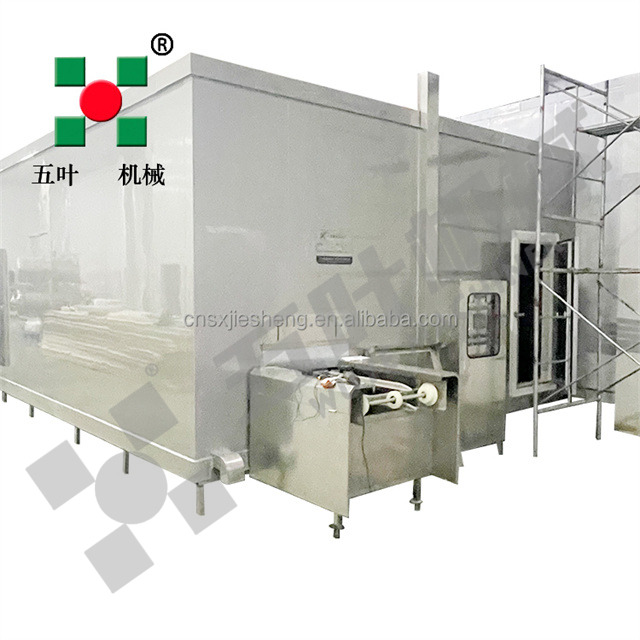
Floor Space Economy: Vertical conveying delivers continuous 360-degree freezing, drastically reducing the linear footprint required for high-capacity output.
Yield Protection: Optimized thermal transfer and horizontal airflow mitigate drip loss (targeting ~0.5% to 0.6%) and lock in product weight and moisture.
Process Integration: Modern units integrate with central plant controls, eliminating "islands of automation" to prevent energy waste and human error.
Risk Mitigation: Advanced Clean-in-Place (CIP) systems and hygienic designs reduce foreign material contamination and safeguard compliance.
Linear freezing systems demand extensive horizontal space across the factory floor. This straight-line layout often forces processors to cap line speeds prematurely. Sometimes, plant managers must undergo disruptive facility expansions just to accommodate longer tunnels. Industrial real estate is highly restricted. You can bypass this severe constraint by utilizing vertical space effectively.
By utilizing a central rotating drum and stacking conveyor tiers upward, vertical systems deliver "more cold in less space." The belt spirals seamlessly around the drum. This orientation allows hundreds of feet of active cooling belt to occupy a remarkably small square footage. It radically shifts the plant floor dynamic. You unlock valuable real estate for packaging lines or additional processing equipment.
Throughput scalability becomes highly achievable. This vertical geometry allows facilities to scale easily. You can transition from lower batch volumes up to high-capacity continuous lines. Modern configurations frequently handle upwards of 3,000+ kg/hr right within the existing plant footprint. You avoid breaking ground on new building additions.
However, implementation requires careful structural planning. While horizontal footprint is minimized, plants must account for vertical clearance and ceiling load parameters during installation. Overhead space becomes your primary asset.
Essential Pre-Installation Structural Checks:
Measure exact floor-to-ceiling clearance to ensure adequate top-tier airflow.
Verify structural ceiling load limits for suspending heavy evaporator coils.
Map out precise access points for conveyor in-feed and out-feed elevations.
Confirm structural floor slab thickness to support the heavy central drive drum.
Slow freezing damages food at a cellular level. The science of quick freezing is rooted in ice crystal nucleation. Slow temperature reduction creates massive ice crystals inside the product. These sharp crystals physically rupture delicate cell walls. When end-consumers thaw the product later, they experience severe moisture loss.
Spiral systems solve this biological problem through rapid thermal extraction. They drive core temperatures down instantly. They often utilize -100°C environments powered by advanced mechanical refrigeration or liquid cryogenics. This speed ensures ice crystals remain microscopic. Intact cell walls mean zero structural damage to your food.
Minimizing drip loss protects your sellable weight directly. Evidence-oriented testing in food engineering reveals impressive results. Continuous vertical freezing restricts moisture drip loss to a tiny fraction of a percent. Industry standards target roughly 0.5% to 0.6% drip loss. This performance locks in moisture tightly. When you process thousands of pounds per hour, saving 2% in moisture weight translates to massive yield protection.
Furthermore, this continuous 360-degree airflow prevents mechanical breakage entirely. Static belts or harsh tumbling mechanisms often destroy fragile products. The gentle, continuous spiral motion is crucial for fragile proteins like seafood and poultry. It maintains the exact structural integrity of par-baked items perfectly.
Freezing Method | Ice Crystal Formation | Typical Drip Loss | Cellular Integrity |
|---|---|---|---|
Standard Batch Freezing | Large, destructive | 3.0% - 5.0% | Severely compromised walls |
Traditional Linear Tunnel | Medium to small | 1.5% - 2.5% | Moderate preservation |
Advanced Spiral System | Microscopic, harmless | 0.5% - 0.6% | Maximum cell preservation |
Static tunnels lock you into rigid processing parameters. Conversely, vertical conveyors offer highly customizable belt speeds and dwell times. Processors can easily run distinct pre-cooling, freezing, and chilling cycles. You can process completely different SKUs on the exact same equipment without major mechanical adjustments. This flexibility prevents bottlenecking during seasonal product shifts.
Heavy and high-moisture applications require highly specialized handling. The bakery and ready-meal sectors face unique thermal challenges. Dense doughs require prolonged thermal penetration to freeze the core completely. Deploying a dedicated Pizza Bread Spiral Quick Freezer solves this dilemma. This specialized setup utilizes reinforced belting and targeted horizontal airflow. It manages heavy doughs effortlessly. It prevents dense products from sticking to the mesh or causing dangerous belt sag.
Streamlined Multi-Product Sequencing
Engineered for continuous production, the spiral freezer accommodates a wide range of thermal profiles effortlessly, making multi-product sequencing highly streamlined. Processing facilities can run naked IQF (Individually Quick Frozen) vegetables during the morning shift, and seamlessly transition to thick, packaged ready-meals by the afternoon. To achieve this, operators merely need to adjust the in-feed and out-feed temperature differentials via the intelligent PLC touch screen.
Best Practices for Multi-Product Sequencing:
Optimize Dwell Times: Always group products by their required dwell time. This strategy minimizes the need for extreme conveyor belt speed adjustments, ensuring stable and smooth operation.
Manage Moisture Levels: Run low-moisture products before high-moisture products. Implementing this sequence effectively delays evaporator coil frosting, thereby extending continuous processing time.
Program specific recipes into the PLC (Programmable Logic Controller) for instant changeovers.
Monitor the core temperature of dense bakery items manually during the first test batch.
Isolated machines drain facility resources quickly. The industry calls these disconnected units "islands of automation." Manual parameter adjustments often lead to operators overcompensating blindly. They might run evaporator fans at maximum capacity constantly. They might lower temperatures excessively "just to be safe." This arbitrary human adjustment results in massive energy waste and unnecessary mechanical wear.
You must integrate the freezing unit into your central plant process control system. Tying the equipment into the central network ensures dynamic responsiveness. Belt speeds, temperature, and airflow dynamically match the specific product recipe. Central control removes human guesswork entirely. It prevents operators from overriding engineered efficiency protocols.
Energy optimization features offer immediate operational improvements. Deploy Variable Speed Drives (VSDs) on all internal fans. VSDs adjust motor speeds precisely to current thermal loads, rather than running at a binary on/off state. This reduces electrical draw significantly.
Automated defrost cycles represent another major leap in efficiency. Older systems rely on arbitrary timers to initiate defrosting, which wastes labor and stops production unnecessarily. Modern units trigger defrost cycles based on evaporator coil temperature differentials (delta-T). The system only defrosts when frost buildup actually impedes airflow. This smart monitoring extends continuous production runs dramatically.
Control Component | Isolated Manual Operation | Integrated Central Control |
|---|---|---|
Evaporator Fans | Run at 100% constant speed | VSDs adjust speed to thermal load |
Defrost Triggers | Arbitrary clock timers | Delta-T sensors detect actual frost |
Recipe Selection | Manual dial adjustments | One-touch PLC profile loading |
Error Tracking | Reactive visual inspection | Predictive SCADA system alerts |
Continuous freezing lines pose severe compliance risks if improperly designed. Blind spots and hard-to-reach tiers invite dangerous bacterial buildup over time. Ice accumulation and foreign material contamination can trigger devastating product recalls. These events destroy brand trust overnight. You must address equipment hygiene proactively to meet FDA and USDA standards.
Modern hygienic features protect your facility immediately. Touch-free operational flows limit human contact with raw product. Insist on fully weld-sealed, stainless-steel interiors during the specification phase. Bolted joints and overlapping sheet metal harbor harmful bacteria. Fully welded seams prevent this microscopic harborage entirely. They create smooth surfaces that shed water and debris easily.
Automated CIP (Clean-in-Place) systems are mandatory for high-volume processors. They drastically reduce manual cleaning times. Traditional scrubbing can halt production for entire shifts. Advanced CIP networks cut sanitation down from several hours to under 45 minutes.
Common Mistakes in Hygiene Management:
Relying solely on manual pressure washing, which forces debris into belt hinges.
Using incompatible caustic chemicals that degrade specialized plastic belt components.
Skipping the final drying cycle, leaving residual moisture that forms immediate ice upon restart.
Ignoring floor drain alignment, allowing pooled water to foster bacterial growth beneath the drum.
A Needs-Based Approach to Choosing Quick Freezing Equipment
Choosing the right machinery requires a rigorous technical evaluation framework centered entirely on your specific production needs. Both spiral and tunnel layouts offer excellent, proven solutions depending on food geometry and facility layout. Tunnels, for instance, are highly effective for uniform, flat items like hamburger patties, delivering rapid surface crust freezing. Conversely, spiral layouts are an ideal choice for dense products or facilities with limited floor space, providing the longer retention times and deep thermal penetration required within a compact footprint. There is no universally superior technology; the optimal choice simply depends on what best fits your processing line.
Conducting a Rigorous Production Audit
Before requesting vendor quotes, a comprehensive audit of your production requirements is highly recommended. To ensure accurate equipment sizing and optimal evaporator coil configuration, buyers should precisely calculate their required capacity (e.g., in LBS/HR or KG/HR). Furthermore, it is essential to determine the specific heat of the raw product and map out the exact in-feed and out-feed temperatures required by your quality assurance team. This precise thermal data allows manufacturers to tailor the equipment perfectly to your thermal profile.
Evaluating Long-Term Operational Fit
When evaluating modern quick freezing equipment, the focus should extend beyond the initial installation. It is important to factor in how the refrigeration mechanism aligns with your facility's infrastructure. Whether you opt for mechanical ammonia systems or cryogenic liquid nitrogen setups, both offer distinct technical merits and are highly effective; the right decision is simply the one that matches your plant's operational capabilities and budget. Finally, examine local aftermarket parts availability and ensure the manufacturer provides robust technical support networks to maintain stable, continuous production during peak seasons.
Upgrading to a continuous vertical system represents a highly strategic manufacturing move. It optimizes your facility floor space radically while maintaining high throughput. It actively protects product yield by minimizing drip loss and cellular damage. Furthermore, it integrates continuous, energy-efficient automation directly into your processing line, eliminating wasteful human error.
Your next steps should focus heavily on data collection. First, audit your current LBS/HR bottlenecks to identify capacity limits. Second, calculate your acceptable drip-loss margins to understand your current yield bleed. Finally, consult directly with specialized equipment manufacturers. They will help map out customized belt and airflow configurations tailored exactly to your unique product profiles.
A: Tunnel freezers move product in a straight horizontal line and are ideal for rapid crust freezing of flat products. Spiral freezers stack the conveyor belt vertically around a central drum, offering longer freezing dwell times for complex/dense foods while saving massive amounts of floor space.
A: Yes. Systems configured as a pizza bread spiral quick freezer use reinforced belting, tailored horizontal airflow, and customized variable belt speeds to ensure dense doughs and heavy toppings freeze evenly without mechanical deformation.
A: Defrost frequency depends on the product's moisture content and in-feed temperature. However, modern units equipped with smart sensors and automated coil delta-T monitoring optimize defrost cycles, often allowing continuous operation for a full production week before requiring a major defrost and CIP cycle.