


Views: 0 Author: Site Editor Publish Time: 2026-05-13 Origin: Site


Plant managers and buyers constantly face a critical procurement question. They need realistic budget figures for freezing systems to plan properly. However, manufacturers rarely publish fixed price tags online.
Treating a complex freezing system like an off-the-shelf commodity is dangerous. It often leads to inaccurate capital expenditure planning. You must realize the upfront invoice represents only a fraction of your actual financial commitment. Buying equipment solely based on initial price quotes ignores critical expenses down the line.
This guide unpacks the true acquisition costs and structural price drivers for these systems. We explore long-term lifecycle expenses and essential engineering factors. You will learn how to conduct data-driven vendor evaluations. We also provide actionable strategies to protect your revenue.
Baseline initial costs range from $50,000 for small-capacity units to over $500,000 for high-throughput, highly customized systems.
Upgrading sanitary standards (e.g., from 304 to 316-grade stainless steel) can increase material costs by 15–20%.
Long-term operational costs (energy consumption, maintenance, and product yield loss) often exceed the initial capital expenditure within the first 3–5 years.
Advanced aerodynamics (like crust freezing) require higher initial investment but deliver measurable ROI through reduced dehydration and giveaway.
You must establish baseline expectations based on your specific throughput requirements. This helps you immediately qualify your budget tiers. Industrial buyers often fall into three distinct capacity categories. Each category carries vastly different pricing structures and technical inclusions. Spiral Quick Freezer units scale dramatically in cost as capacity grows.
These units generally range from $50,000 to $150,000. They fit startups, regional processors, and specialized boutique food lines perfectly. Small capacity systems often utilize standard factory configurations. They rely on basic PLC controls rather than complex automation. You sacrifice some advanced features, but you gain a compact footprint and rapid installation.
Expect prices between $150,000 and $300,000 here. This tier suits scaling food processing plants. Manufacturers typically include automated Clean-In-Place (CIP) systems at this level. You will also see optimized variable fin-pitch evaporators. These evaporators reduce frost buildup significantly. Medium systems strike an excellent balance between capital expenditure and operational efficiency.
Industrial giants require investments ranging from $300,000 to well over $500,000. They handle high-volume continuous production lines. These setups demand custom structural engineering. You might need double spiral configurations to maximize vertical space. Vendors utilize advanced computational fluid dynamics (CFD) for airflow modeling. Deep integration into upstream and downstream lines is mandatory.
Capacity and Pricing Summary Chart | ||||
Capacity Tier | Throughput Limit | Estimated Price Range | Best Suited For | Typical Included Features |
|---|---|---|---|---|
Small | <1,000 kg/hr | $50,000 – $150,000 | Startups, Boutique lines | Standard configurations, Basic PLC |
Medium | 1,000 – 3,000 kg/hr | $150,000 – $300,000 | Scaling regional plants | Automated CIP, Variable fin-pitch evaporators |
Large / Industrial | >3,000 kg/hr | $300,000 – $500,000+ | High-volume continuous lines | Double spirals, CFD modeling, Custom engineering |
Prices fluctuate wildly based on specific engineering choices. You are not just buying a metal box. You are investing in material science, aerodynamics, and sanitation technology.
Metal quality dictates durability and hygiene. Standard food-grade 304 stainless steel handles most basic applications. However, 316-grade stainless steel offers superior resistance to corrosive cleaning agents. Specifying 316-grade adds a 15–20% premium to material costs. Highly acidic or saline foods require this upgrade.
Wear parts also impact pricing. Ultra-High-Molecular-Weight Polyethylene (UHMWPE) wear strips reduce friction along the belt path. High-tensile POM (polyoxymethylene) or reinforced stainless steel mesh belts influence overall durability. Cheaper plastics wear down faster, forcing early replacements.
Airflow Dynamics: Standard vertical airflow provides reliable cooling for robust products. Horizontal or impingement airflow systems push cold air faster. Systems capable of high wind speeds (up to 30 ft/s) cost more to engineer. They freeze food significantly faster, improving product quality.
Defrost Systems: Ice buildup stops production lines. Standard units require frequent shutdowns for defrosting. Integration of Air Defrost (ADF) systems changes this dynamic. Pulse-air technologies clear frost continuously. They extend continuous uptime up to 144 hours without sequential defrosting. This premium feature maximizes factory throughput.
Manual cleaning setups save upfront cash. However, they drain labor resources daily. Fully automated Clean-In-Place (CIP) systems cost more initially. They handle washing, foaming, disinfecting, and high-pressure drying automatically. CIP guarantees repeatable sanitation. It eliminates human error and protects your brand from recall risks.
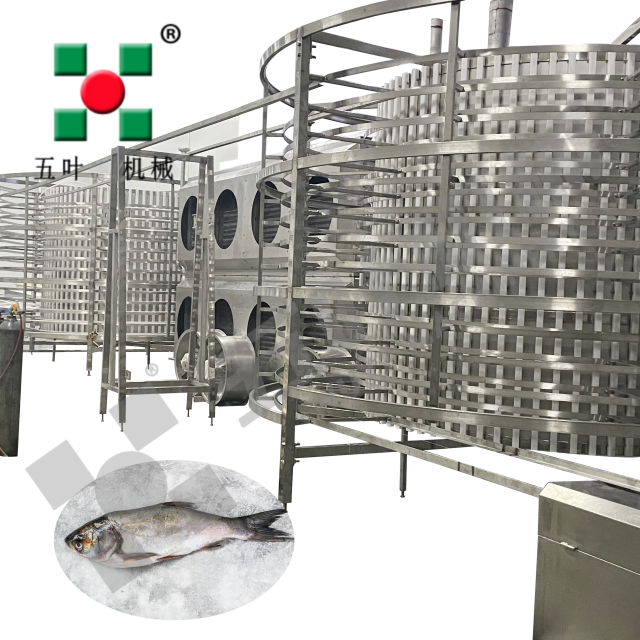
You must shift your focus away from the initial purchase order. Evaluate the 10-to-15-year lifecycle of the equipment instead. Hidden operational costs will dwarf the original invoice.
Compressors and fans run continuously. Refrigeration demands immense power. A system designed with high-efficiency motors will lower your monthly utility bills. Optimal insulation choices, like high-density polyurethane panels, keep the cold inside. These premium panels might cost 10% more upfront. They pay for themselves rapidly through reduced kW/ton metrics over the years.
Machines degrade under constant stress and freezing temperatures. You must budget for eventual replacements. Drive motors, tensioning devices, and specialized conveyor belts wear out. Premium components delay these replacements. Cheaper upfront systems often use inferior drive linkages. These fail earlier and cause unexpected production halts.
Common Mistake: Failing to budget for annual preventative maintenance. Neglecting belt tensioning leads to catastrophic track failure.
This is the most critical financial metric processors ignore. Cold air pulls moisture out of warm food. A cheaper freezer dehydrates food by 2% more than a premium model. This dehydration silently bleeds your revenue. If you freeze 1,000 kg per hour, a 2% extra loss equals 20 kg of lost product hourly. You lose the financial value of that moisture retention forever. Premium aerodynamics minimize this giveaway.
How the physical characteristics of the food behave dictates the engineering specs. Consequently, the product determines the final price.
Raw meat presents unique challenges. When speccing a Spiral Freezer for Chicken Cubes, systems often require rapid crust-freezing technology. Sticky meat pieces clump together on the belt easily. Crust-freezing locks in surface moisture instantly. This prevents diced pieces from sticking to the mesh or each other. This process necessitates specialized impinging airflow. Upgrading to this aerodynamic tier raises the equipment price significantly.
Bakery lines generate massive heat. Cooling baked goods from +80°C to ambient requires intense thermodynamic management. Freezing raw dough presents different challenges. Both processes require heavy-duty pre-cooling integration. Sometimes engineers use ambient air to reduce mechanical refrigeration loads first. This alters the compressor sizing entirely and impacts overall cost.
A spiral unit rarely operates alone. You must consider how the unit functions within a broader line of Quick Freezing Equipment. Coupling the main freezer with external pre-chillers requires advanced control synchronization. Connecting downstream glazing machines demands precise outfeed heights. Customizing infeed and outfeed elevations adds structural engineering costs.
Many buyers consider used equipment to lower initial capital expenditure. You must address the implementation realities, weighing risks against rewards carefully.
Manufacturers often acquire trade-ins from expanding enterprises. They refurbish these machines for resale.
Pros: You gain significant initial cost savings. Deployment happens much faster since the frame already exists.
Cons: Availability remains strictly dictated by market supply. You might face compromises on exact dimensions. Older frames often rely on outdated energy-efficiency baselines.
Ordering a newly fabricated machine offers maximum control.
Pros: You achieve exact alignment with facility constraints. Custom bottom-in/bottom-out configurations save floor space. You guarantee modern HACCP compliance. You receive full warranty coverage and the latest IoT/smart control integrations.
Cons: Lead times span several months. You face peak capital layout upfront.
We advise buyers to scrutinize warranty exclusions closely on refurbished models. Always verify if the PLC and main drive motors are covered. Partial warranties often exclude the most expensive electronic components.
Best Practice: Ask for a documented load test report before accepting a refurbished delivery. Ensure the evaporator coils underwent pressure testing for micro-leaks.
The cost of a spiral freezing system remains a multifaceted equation. You must balance initial capacity requirements against material engineering and long-term operational efficiency. An inexpensive quote usually hides expensive operational flaws.
Decision-makers need to move beyond generic price shopping. We recommend requesting a comprehensive lifecycle cost projection from potential manufacturing partners. Ask vendors for computational fluid dynamics (CFD) modeling to validate aerodynamic claims. Verify your projected return on investment meticulously before issuing a final RFP.
A: It depends on the product density and entering temperature. For example, standard chicken nuggets entering at +80°C can drop to a core temperature of -18°C in approximately 40 to 45 minutes, compared to several hours in traditional blast rooms.
A: With rigorous maintenance and adherence to CIP protocols, industrial-grade systems are typically engineered for a 10 to 15-year lifespan.
A: Yes, an automated CIP system adds to the initial CAPEX, but it is a critical investment for compliance and labor reduction. It guarantees standardized sanitation (wash-foam-sanitize-dry) and significantly cuts down daily manual labor hours, improving long-term profitability.
A: While 304 is standard, 316 stainless steel contains molybdenum, offering superior resistance to pitting and corrosion from harsh, acidic cleaning chemicals and high-saline food products (like seafood). It adds roughly 15-20% to material costs but prevents premature degradation.


